Check for danger
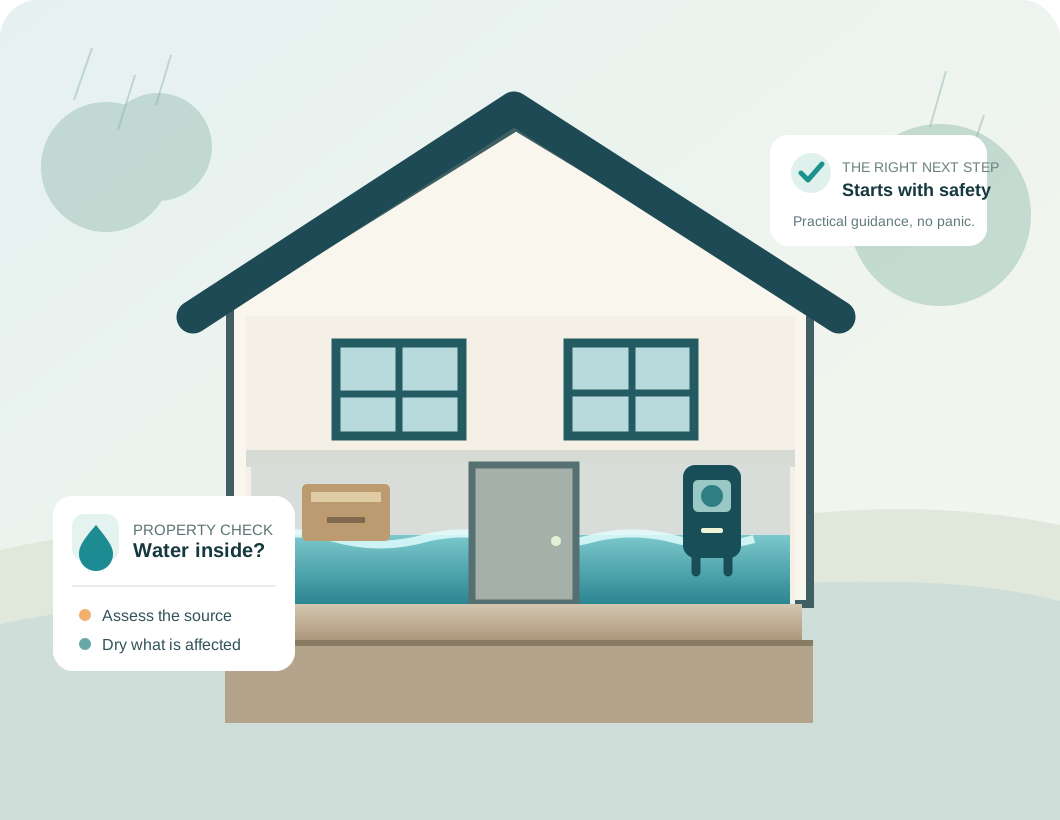
Keep out of standing water near electrical equipment. Avoid unstable ceilings and water that may contain sewage.
Water damage restoration guidance in Appleton, WI—from a flooded basement or burst pipe to wet drywall and structural drying. Understand the risks, know what to do first, and request assistance without the guesswork.
Water removal · Moisture assessment · Structural drying · Recovery planning
You don’t need to diagnose everything immediately. Handle urgent safety issues, limit additional water if possible, and document what happened.
Keep out of standing water near electrical equipment. Avoid unstable ceilings and water that may contain sewage.
For indoor plumbing leaks, use the shutoff valve when accessible. A plumber may be needed for repairs.
Photograph affected rooms and belongings when safe. Contact your insurer about next steps and documentation.
Professional assessment helps identify affected materials and appropriate extraction, cleanup, or drying.
Different water sources affect materials differently. The correct restoration plan depends on what happened—not just how much water you can see.
Sudden leaks and unexpected water intrusion require a safety-first assessment, source control, water removal and a plan for affected materials.
Read service detailsStanding water is only the beginning. Carpet padding, subfloors and wall materials may still retain moisture after extraction.
Read service detailsFrom sump pump overflow to heavy-rain intrusion, assess the water source, contamination risk and impact on finished-basement materials.
Read service detailsMoisture may remain behind baseboards, beneath flooring or inside drywall. Drying should be guided by measurements, not guesswork.
Read service detailsDrain and wastewater backups require extra caution. Contaminated materials and porous surfaces may need specialized handling.
Read service detailsFreezing plumbing, ice dams and intense rainfall can leave hidden moisture. Restoration addresses the damage; another trade may fix the cause.
Explore the causesCold winters, spring thaw and intense summer rainfall create different paths for water to enter a home. Indoor plumbing and appliance failures can happen in any season.
Overflow, drainage problems and groundwater intrusion can affect carpet padding, drywall and lower-level belongings.
Winter conditions may lead to plumbing leaks or interior roof-water damage that isn't immediately visible.
How water enters matters: surface flooding, foundation seepage and sewer backups can have different cleanup and insurance implications.
Knowing the difference can save time and help you ask better questions about the scope of work.
Every property is different. These are the stages commonly used by qualified water-restoration professionals; the actual scope must be determined on site.
Identify the source, safety concerns, contamination and affected materials.
Remove accessible standing water with appropriate equipment.
Evaluate what can be salvaged and measure drying progress.
Document the result and identify any necessary reconstruction.
Moisture meters measure material conditions. Thermal imaging can help locate areas to investigate, but it does not prove moisture on its own.
A burst indoor pipe is not the same insurance event as groundwater entering a basement. Policy language, endorsements and cause of loss determine coverage.
Read Wisconsin's official insurance guidanceGeneral guidance only. Ask your insurer about your actual policy.
From recurring basement leaks to what drying actually means, these are decisions Appleton property owners need to make.
We don't publish made-up project stories, customer ratings or technician certifications. Instead, use this practical checklist when speaking with a provider.
Can they explain what appears to be causing the loss—and where source repairs may require another professional?
What materials will be checked, how will progress be tracked, and what defines completion?
Which work is mitigation, which is reconstruction, and how will changes be approved?
Real project documentation and authenticated reviews can be added when available and permissioned. They are intentionally not fabricated here.
Describe what happened, where the water came from and what is affected. We'll help you understand the next step and whether appropriate provider assistance is available.
(920) 298-0230Call to inquire about service availability. No unverified response-time guarantees.
Call before visiting; walk-in office access is not confirmed.
PREPARE FOR YOUR CALLWater source · When it started · Affected rooms · Safety or sewage concerns
Review immediate safety steps ↗Use the service pages for an active incident or the homeowner guides to understand causes, materials, insurance and drying.
Sudden leaks, rising water and unexpected moisture need a safety-first response. Learn what to do before requesting an assessment.
Explore pageRemoving standing water is the beginning—not the end—of water mitigation. Understand extraction, hidden moisture and next steps.
Explore pageFrom sump pump overflow to heavy rain, a basement flood can affect flooring, drywall and stored belongings. Understand safe cleanup.
Explore pageWater returning through a floor drain or toilet may contain biological contaminants. Learn the safe next steps.
Explore page